

When it comes to kitchen flooring, the spotlight shines bright, revealing every spilt sip, messy misstep and day-to-day demands of Aussie family life. Choose durable, strategy-minded materials ready to take the heat, or pick pretty but high maintenance divas destined to lose their looks before long. What options play to win best on the shifting stage our kitchens demand each day? Let’s see who takes the crown!
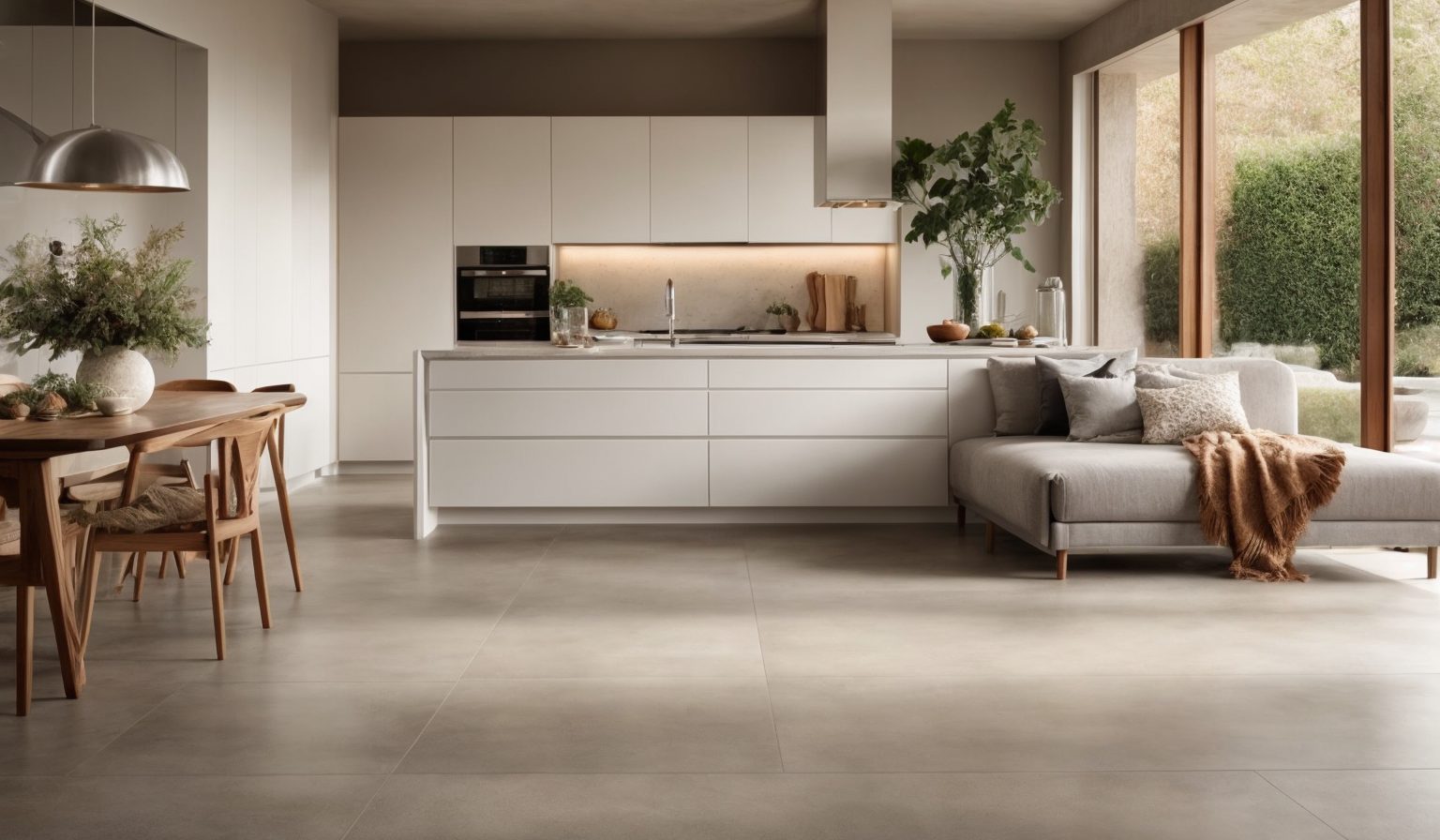
Porcelain tile flexes formidable strength in durability and stain resistance classes few others come close to matching. Properly grouted installations stand invincible against water, heat, cracking and scratches decade after decade. Yes, it may feel harder underfoot than cushier competitors, but porcelain earns best all-round honours few can contend with.
Ceramic tile follows as a mid-range multi-tool option, blending lots of style options mimicking natural stone, concrete and wood grain at far lower cost. It doesn’t quite achieve porcelain’s super strength, but brings respectably resilient, carefree performance and good looks. For beauty and reliability without breaking budgets or backs, ceramic makes the shortlist.
Natural stone dazzles with depth and dimensions beyond ceramics’ ability to recreate. Marble, granite and others capture light, interact with food stains and wear like real “skin in the game” rather than flat façades. But stone demands a “protect this diva at all costs” strategy against etching, scratches and fragility if not shielded behind sealants, careful cleaning and prohibiting pointy heels likely to puncture its delicate complexion. Ah, the price we pay for unparalleled uniqueness stone lends.
Concrete, the unflashy Zen warrior, wields stealthy strength against water and wear while grounding modern minimalist kitchen aesthetics. Raw yet refined showcasing natural grey tones or accepting stains to shift its palette, concrete earns its place through subtle, industrial elegance. Yet its hardness and tendency to stain or crack means sealing and consideration should not be undervalued for its understated look.
Our panel of judges review the contenders, looking beyond superficial charm to floor coverings promising enduring performance worthy of their mettle—strength, resilience and charm tested by the everyday clashes in the battleground we call home. Let the best material win!
Tile (ceramic, porcelain) – Very durable and water-resistant material. Wide range of styles replicating stone, wood, or modern looks. Hard underfoot without cushioning. If professionally installed and grout properly sealed, can last for decades with minimal maintenance besides cleaning. Crack/chip risk if heavy items dropped. Grout lines need periodic re-sealing.
Laminate – Homeowner-friendly affordable option replicating appearance of hardwood, stone, etc. Clicks together as interlocking planks with tongue and groove edges. Core contains fibreboard or plastic instead of natural wood. Very prone to water damage, swelling and seeping underneath to warp boards. Also, easily scratched or chipped on surface with no ability to sand out damaged areas.
Hardwood – Beautiful warmth and wood grain patterning but comes at a premium price point. Softer or porous unfinished varieties like pine can dent and stain easily. Needs periodic complete sanding/refinishing to prevent worn, dated looks over time which is expensive. Not waterproof at all so spills must be wiped quickly before absorption and swelling damage occurs. Subject to scratches and dings with heavy use.
Natural Stone (marble, etc.) – Incredible high-end material appearance but also the highest cost in materials and professional installation. Takes skill to properly seal natural stone to prevent etching, porosities staining and being slippery. Can last an extremely long time with proper installation but material costs typically limit use to smaller spaces than full kitchen flooring. Need to avoid dropping heavy objects that can crack/chip the surface.
Polished Concrete – Has gained popularity for modern industrial aesthetics. Can be stained/dyed a variety of colours. Super durable but very unforgiving hard surface without cushioning or warmth. The porousness of concrete means sealing is required to avoid moisture absorption leading to cracks and stains. Can easily scratch/etch. Typically only polished/sealed in higher end projects because cost is close to natural stone installation.
Hybrid Flooring – Combines a real hardwood top wear layer with a waterproof vinyl layer underneath or attached cork backing for stability and moisture protection. Provides beauty of wood with resilient impermeability against spills and real wood’s tendency to dent. Offers good durability over time and easier repair options. Very functional “best of both worlds” option yet at a much higher cost than standard vinyl or laminate – closer to hardwood prices.